
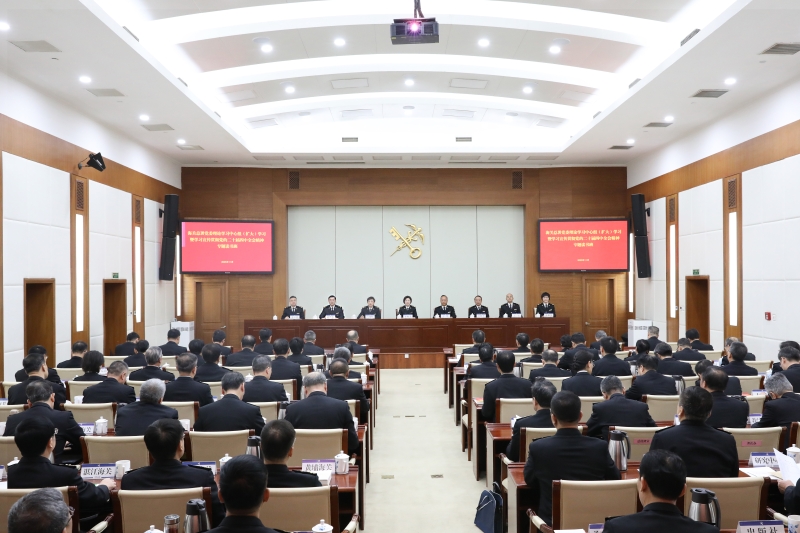
General Administration of Customs Holds Study Session on Implementing Spirit of Fourth Plenary Session of 20th CPC Central Committee

Photo: The General Administration of Customs Party Committee held an enlarged theoretical study session and a special study session on studying and implementing the spirit of the Fourth Plenary Session of the 20th CPC Central Committee. (Photo by Gao Liqiang)
From November 11th to 12th, the General Administration of Customs Party Committee conducted an enlarged theoretical study session and a special session to study and implement the spirit of the Fourth Plenary Session of the 20th CPC Central Committee. Sun Meijun, Secretary of the Party Committee and Director of the General Administration of Customs, led the session and delivered a keynote speech. Party Committee members shared insights, experiences, and strategies for implementing the plenary session’s directives.
Significance of the Fourth Plenary Session
The Fourth Plenary Session of the 20th CPC Central Committee was a key meeting marking China's new journey toward the second centenary goal. General Secretary Xi Jinping highlighted the achievements since the Third Plenary Session, analyzed domestic and international situations, and outlined major principles, strategic tasks, and guarantees for economic and social development over the next five years. The "Suggestions of the CPC Central Committee on Formulating the 15th Five-Year Plan for National Economic and Social Development" adopted during the session serves as a guiding framework for the 15th Five-Year Plan period, with far-reaching implications for customs modernization and national development.
Key Directives for Customs Authorities
The session emphasized that all national customs authorities must prioritize studying, publicizing, and implementing the plenary session’s spirit. Party committees at all levels are tasked with:
- Taking primary responsibility for leadership and organization
- Conducting systematic learning, training, and public communication
- Researching and interpreting key directives and principles
- Aligning customs work with the plenary session’s strategic goals and decisions
Customs authorities are required to implement strategic tasks and measures, uphold the "two establishments," and achieve the "two safeguards" with concrete actions.
Focus Areas for Implementation
Customs authorities nationwide are expected to focus on:
- Achieving economic and social development goals outlined in the plenary session
- Executing major customs-related strategic tasks in the 15th Five-Year Plan
- Implementing directives on the Hainan Free Trade Port and conducting comprehensive customs closure operations
- Promoting stable foreign trade growth while preventing risks and ensuring security
- Ensuring completion of 14th Five-Year Plan objectives and preparing for a high-quality 15th Five-Year Plan
- Strengthening Party governance, combating corruption, and maintaining a clean political environment
Special Lecture and Participation
The session featured a special lecture by Wang Changlin, Vice Chairman of the National Development and Reform Commission, on studying and implementing the plenary session’s spirit. Senior officials, chief engineers, and leaders of various departments, institutions, and directly affiliated customs units attended, along with Discipline Inspection and Supervision personnel.
Conclusion
The study session reinforced the importance of integrating the plenary session’s principles into daily customs work, promoting high-quality development, modernizing customs operations, and ensuring political integrity. It represents a strong commitment to advancing China’s modernization and economic goals in the new era.